

CRITICAL REFLECTION: Marketing settlement rates
In our Beyond the Table course, we have an entire module on ethics. But it doesn’t focus on the ethics of practice in the sense of what we do in the mediation or coaching room with the client. Rather, it focuses on the ethics of

Are frameworks useful to help understand complex conflict contexts?
Claire Holland and Judith Rafferty, conflict management specialists, academics, researchers and trainers with the Conflict Management Academy (CMA), say YES! According to Judith and Claire, frameworks are a useful way to break down and look at complicated conflict situations in a way that can bring
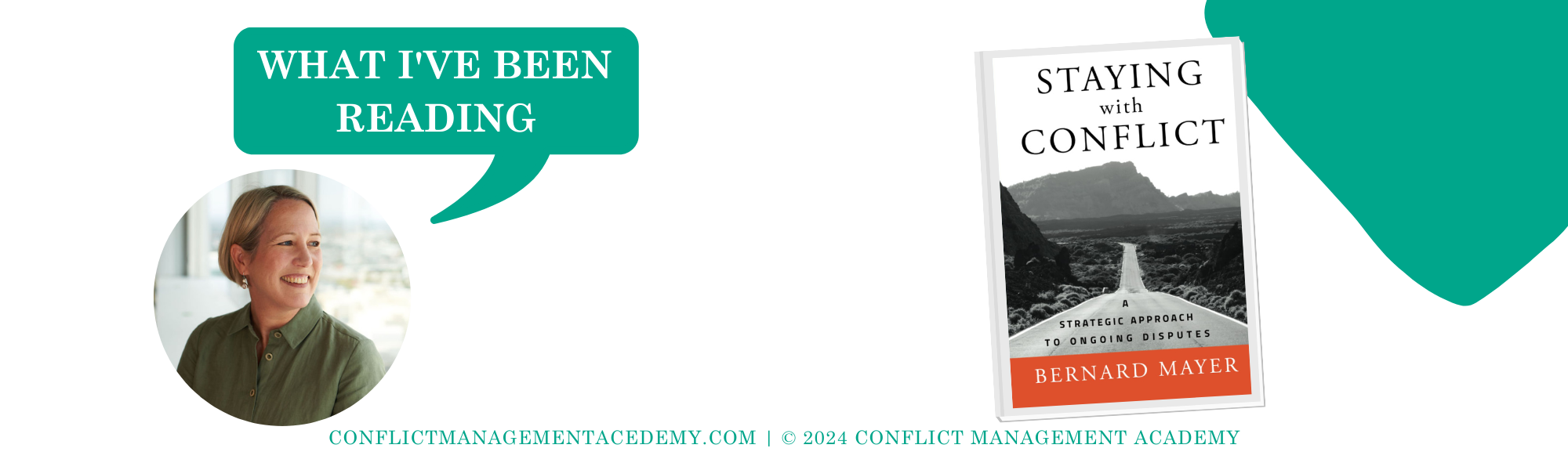
WHAT I’VE BEEN READING: Staying with Conflict by Bernard Mayer
This book is not new, it’s been around since 2009, but it remains one of the few books about how to work with conflict that is not resolvable, or that may take many years to resolve. The book introduces the role of the conflict specialist
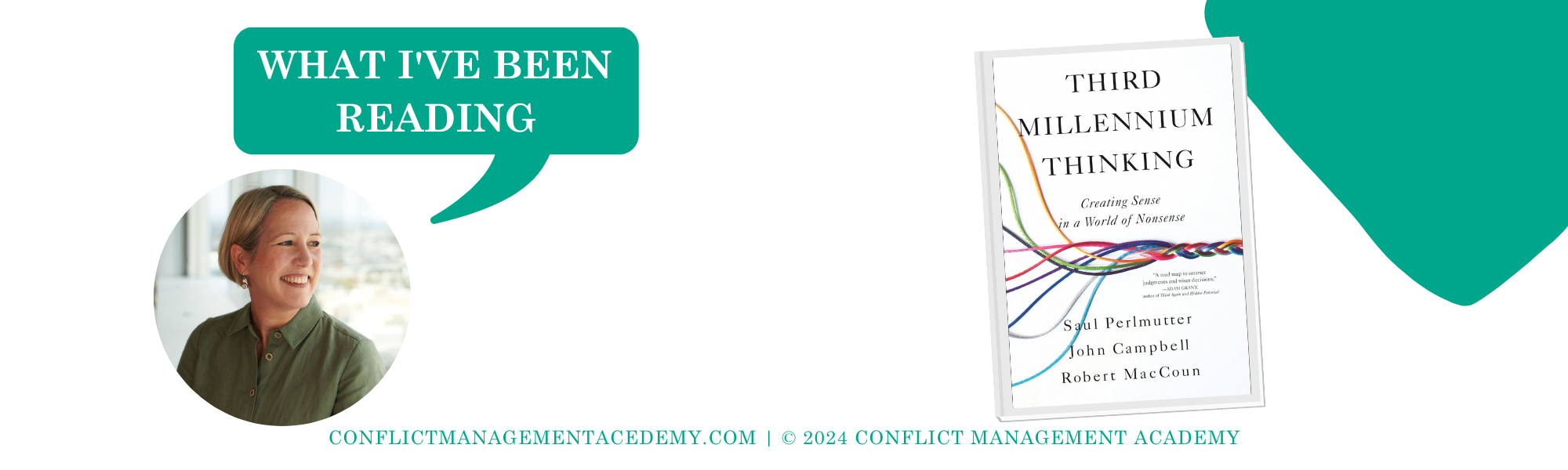
WHAT I’VE BEEN READING: Third Millennium Thinking by Saul Perlmutter, John Campbell and Robert MacCoun.
This book, written by a physicist, a philosopher and a psychologist/lawyer is basically about how to apply the “thinking tools” used by experts in these disciplines to everyday life and decision making. It’s about managing information overwhelm, and learning how to think. The book developed
Transformative mediation – separating the myth from the reality
Many mediators know about transformative mediation, but in my experience, not many mediators really understand it. I was certified as a transformative mediator in 2010 (Baruch Bush was my assessor) and was approved to teach transformative mediation by the Institute for the Study of Conflict
Solid gold tips for staying on the cutting edge of ADR
On 21 March I spoke at the Australian Disputes Centre conference in Sydney. This is what I spoke about. Consider how conflict coaching might support your existing processes. We’ve each been asked today to share our solid gold tips and techniques for staying on the