

You are doing an intake with one of the parties to a workplace mediation. Somewhere in the conversation they tell you, almost as an aside, that they are already looking for other roles. They have mentally checked out. They are hoping that by the time the mediation takes place, the question of how they work with this person will be someone else’s problem.
It is a disclosure that creates a genuine dilemma for practitioners.
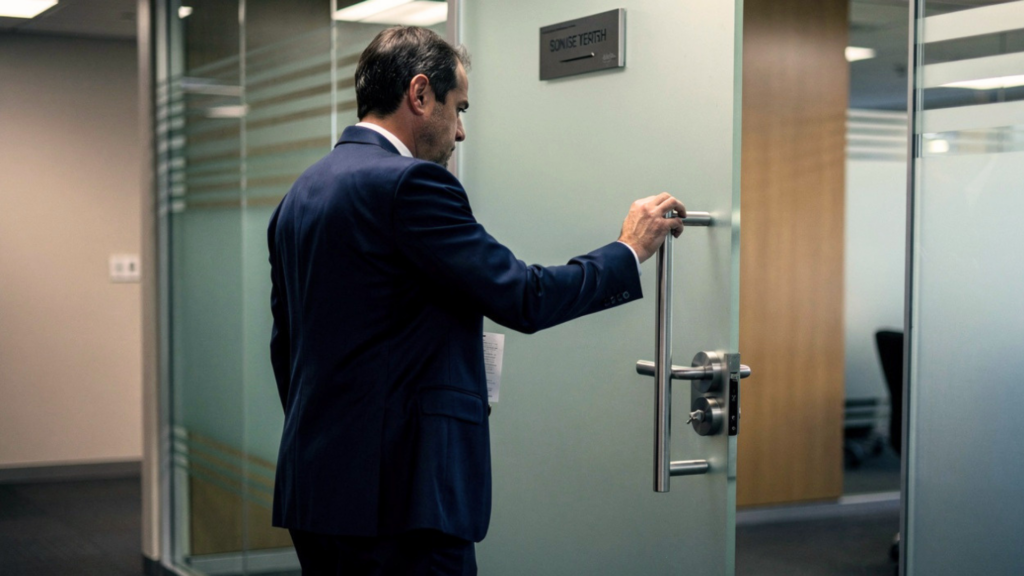
Should the mediation go ahead?
For many practitioners, this disclosure triggers an immediate concern. If the party is planning to leave, are they really committed to the process? Is it fair to the other party? Is there even any point?
Most frameworks for assessing mediation suitability include criteria along the lines of “Both parties should:
- be willing to participate
- be open to changing their thinking and/or behaviour
- have some willingness to discuss a range of solutions.”
Against those benchmarks, a party who has mentally “checked out”, is job-hunting and quietly optimistic that they will not have to see this person again for much longer may not be very motivated or willing to participate or discuss changes to their future working relationship.
But before you pick up the phone to the referrer and suggest the process is not viable, it is worth considering a few other things.

The purpose of the mediation
Even where the future of the relationship is limited or uncertain, a mediation or facilitated conversation can still offer something real.
A party who has mentally checked out may still have eighteen months of unaddressed grievances, a deep need to be heard, and no clear sense of why things deteriorated the way they did. A conversation can provide some or all of those things without producing a future plan for working together. Understanding what went wrong matters in its own right. Being heard is not a small thing.
For a party who is leaving, or hoping to leave, some sense of closure can be the difference between moving on and carrying a corrosive story into the next role. And there is also the question of the period between now and then. If a new role is pending but not confirmed, both parties still have to get through the coming weeks. A conversation that establishes some basic parameters for that time, even informally, can be worth having. It does not need to be framed as rebuilding the relationship.
And then there is what nobody can predict. People arrive at mediation with fixed narratives about each other, and those narratives shift more often than you might expect. Sometimes a single piece of context, a disclosure neither party anticipated, or simply the experience of sitting in the same room and speaking honestly, changes something. Not always. But often enough that foreclosing the possibility before the conversation begins is a mistake.

Looking for another job is not bad faith
Looking for another job while in a workplace conflict is not bad faith. In most cases, it is a rational, self-protective response to a situation that has become unmanageable.
People in conflict who are actively pursuing other roles are doing what sensible people do when they are not sure their current situation is sustainable. They are developing their BATNA: their Best Alternative to a Negotiated Agreement. That is not a sign of dysfunction. It is a sign of someone managing their own risk.
A party who is looking for other roles and is still willing to show up to a mediation is demonstrating a kind of pragmatic good faith. They are not walking away. They are not refusing to engage. They are keeping the process open while also protecting themselves.
It is also worth reflecting on the implicit standard being applied when we flag job-searching as a concern. We do not typically require parties to prove they have no alternative plans before allowing them to participate. We do not ask managers whether they are considering reassigning or restructuring before letting them sit at the table. The scrutiny being applied to the party who is looking for another job should be applied evenly, and when it is, the picture often looks rather different.

Good faith and parties’ intentions
There are intentions going in that should concern a practitioner: attending with the explicit plan to use the process as a fishing expedition for information, or to pressure the other party into an agreement they would not otherwise reach. These raise real questions about whether the process should proceed at all.
Wanting to leave a job is not in that category. Neither is being uncertain whether the process will help, or coming in with modest expectations about what might be achieved. A party can be sceptical, disengaged, even fairly resigned, and still participate in a way that is honest and that offers something to the other person.
Some more useful questions than “will they commit to rebuilding this relationship?” might be:
- Is this party willing to be in the room?
- Are they willing to listen, even if they disagree?
- Are they willing to say something honest about their experience?
- Are they willing to engage with what the other person says, even if only to correct it or push back?
If the answer to those questions is broadly yes, there is something to work with, regardless of whether they intend to continue working in this role for a long period of time.
It is also worth asking whether the same scrutiny is being applied consistently. If you are examining this party’s good faith carefully, what do you know about the manager’s genuine investment in the process? Has the referrer acted in good faith by withholding information about the employee’s situation? Good faith is not a quality that lives only in one party.

What about transparency?
One thing practitioners sometimes wrestle with is whether the job search needs to be disclosed to the other party. If the employee is looking for another role, should the manager know before coming into a process prepared to work on the relationship?
It helps to separate three things that often get blurred:
- Transparency as a value in mediation refers to the process being conducted honestly: no deception, no hidden agendas from the practitioner, no withholding of information that is material to the safety or integrity of the process.
- Confidentiality is a structural feature of the process: what a party tells you in pre-mediation belongs to them unless they consent to it being shared.
- Disclosure is what parties choose to share with each other. It is their choice to make.
The fact that someone is looking for another job is personal information. Employees routinely pursue other roles without telling their current employer, because doing so can make their situation worse. Not disclosing a backup plan is not a form of deception. It is normal.
It is almost never the mediator’s decision to override a party’s choice about their own private information. If you feel so uncomfortable holding this information that you cannot proceed without it being on the table, your options are to encourage the party to disclose it themselves, to seek supervision, or to decline to continue.
It is also worth asking whether the information is as material as it might feel. In many cases like this, the job search is not a secret within the organisation. The referrer knows, other colleagues know, and the other party may well suspect it. The question is not whether this is known, but whether the other party has a right to be told. In most cases, they do not.

What the referrer wants vs what the employee wants
Referrers often have a preferred outcome: they want the employee to stay, the relationship to be repaired, and the problem to go away. In specialist fields with limited pools of skilled staff and no easy backup, that pressure can be significant.
That pressure can shape how a practitioner frames the situation without them fully realising it. If the referrer’s preferred outcome starts to function as the definition of success, anything short of it starts to feel like a failure. It’s worth noticing if that may be happening.
There is also a broader question about how the situation got to this point. In many cases like this, the employee has been raising concerns for some time and has not been heard. There has been no formal process, no real management response. By the time the practitioner is involved, the conflict has been running for months or years.
Practitioners are frequently brought into situations that have been under-managed for a long time. The risk is absorbing responsibility for fixing a problem that the organisation created or allowed to fester. It is worth being clear with yourself about where your responsibility begins and ends.

What to explore in intake
When a party discloses they are looking for another role and have mentally disengaged from the relationship, here is what the intake conversation might usefully explore.
What do they want to get out of the conversation? Even a party who does not want a future working relationship usually wants something: understanding, acknowledgement, answers, or the chance to say something that has never been heard. Understanding what, for them, might make the mediation worth attending helps clarify what the process might realistically offer them.
What happens if a new job does not come through? If the backup plan takes longer than expected, or does not materialise, what then? If they move to another area of the same organisation, will they have any contact with this person at all? Sometimes the assumption that leaving solves the problem is not as solid as it first appears.
What if the conversation surprises them? What if they went into the conversation and came out feeling differently than expected? This is not about pressuring them toward optimism they do not feel. It is about making sure they have considered the full range of possible outcomes, not just the one that matches their current mood.
What are the best and worst cases of proceeding, and not proceeding? Standard reality testing, but worth doing explicitly. What is the best that could happen if they participate? The worst? And what is the best and worst case if they do not? This includes the professional consequences of declining a process the organisation has invested in.
If they decide to participate, what might they say in their opening? They do not need to pretend to want a future working relationship. An honest opening statement that is clear about what they want to get from the conversation keeps the space open, rather than shutting it down before the other party has had a chance to say anything.
Questions for reflection
It can be useful to go back over past mediations and ask: what were the things of value that came out of it, instead of or as well as an agreement?
Things like greater understanding, closure, a better sense of one’s own choices, a more respectful parting of ways: these matter. They are harder to put in a report, but they are real outcomes. Building the habit of looking for them makes it easier to recognise them as worth working towards, even when the prospect of an agreement looks slim.
When a party discloses they are looking for another job, they are giving you an honest picture of where they are. That honesty is exactly what a mediation can work with.