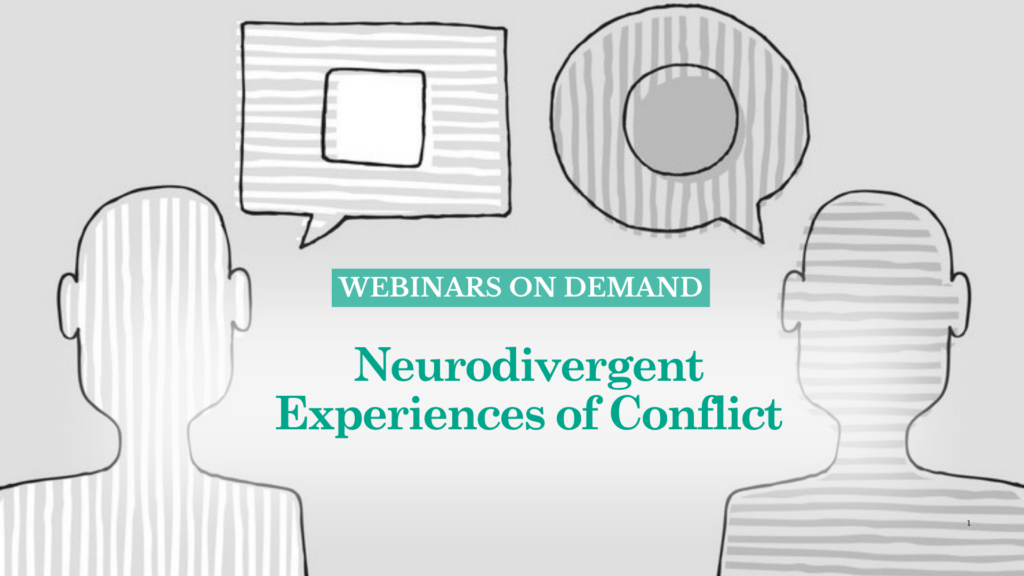
What conflict looks like when brains, nervous systems and bodies work differently, and what that asks of the practitioner in the room.
Most conflict resolution processes were built around a set of assumptions: that people read the same social cues, show what they feel in recognisable ways, and can take in information, weigh it, and respond all in real time. Those assumptions don’t hold for everyone. When a participant processes information differently, masks to get through the day, or hears bluntness as honesty rather than aggression, the standard process can quietly screen them out.
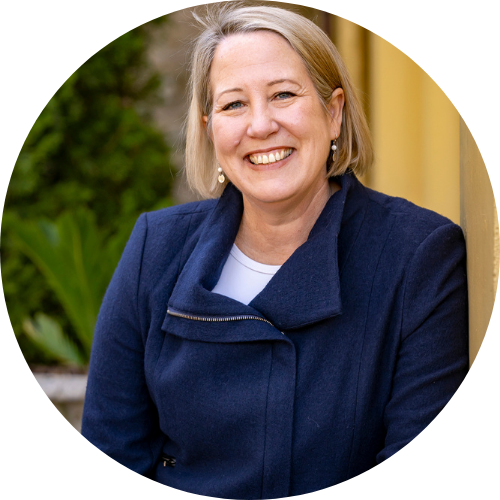
In this session, Dr Samantha Hardy walks through how conflict is actually experienced across different neurotypes, and what practitioners can change so that more people can take part. It’s a practitioner-to-practitioner overview, drawn from research and from her own lived experience as an autistic mediator and coach.
What this webinar covers
Why "neurodivergent" and "neurotypical" mark a moving boundary, and why it matters who is holding the frame and for what reason
The double empathy problem, and why miscommunication across neurotypes is a shared problem rather than a deficit in one person
How masking works, what it costs, and its links to burnout and to coercive and controlling violence
Two opposite patterns in recognising conflict: missing the cues entirely, and rejection sensitivity that finds conflict where there is none
Patterns in how people create and respond to conflict, including literalness, a strong sense of justice, all-or-nothing repair, information-giving, and the difference between people-pleasing and hyperfocus
Where standard process design becomes a barrier, from sensory load before the conversation even begins, to cognitive load in the room, to comfort with uncertainty
How to build flexibility in from the start, so people don't have to disclose a diagnosis or audition for support to get what they need
“Slowing down is not a delay. It’s an intervention. And it helps everybody.”
Who it's for
Mediators, conflict coaches, FDR practitioners, family report writers, child consultants, HR and workplace practitioners, and anyone who sits with people in conflict and wants their process to work for more of them. It’s also for neurodivergent practitioners and participants who want clearer language for their own experience.
You don’t need a background in psychology or counselling. If you work with people in conflict, this is built for you.
About your trainer:
Dr Samantha Hardy is the Director and Lead Trainer for The Conflict Management Academy. She is an experienced mediator and conflict coach and the founder of the REAL Conflict Coaching System™. She provides conflict support to managers and leaders across the world. She also provides professional development training, supervision and mentorship to mediators and coaches who work with clients in conflict.
Sam is accredited under the Australian Mediation and Dispute Resolver Accreditation System and is a Certified Transformative Mediator by the US Institute of Conflict Transformation. She is a Certified Narrative Coach. In 2021 Sam was awarded the Australian Resolution Institute Award for Service to Dispute Resolution for her leadership and innovation in the field. She was also awarded 2022 Conflict Coach of the Year at the Australian Dispute Resolution Awards.