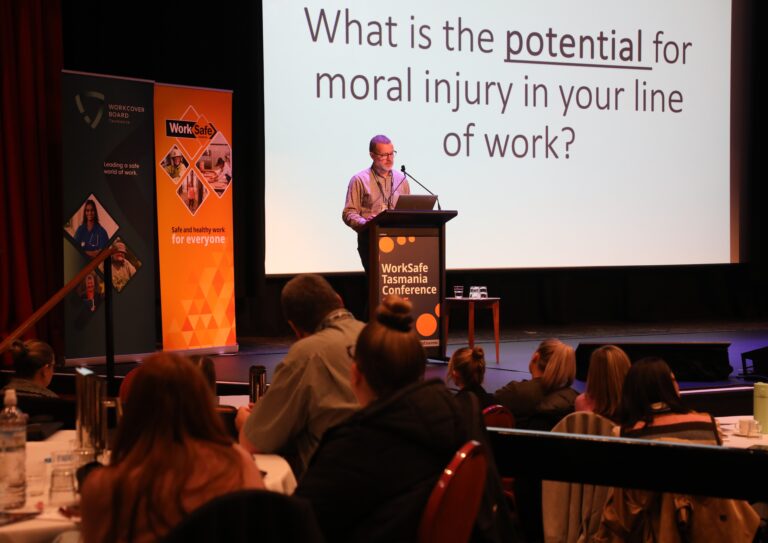
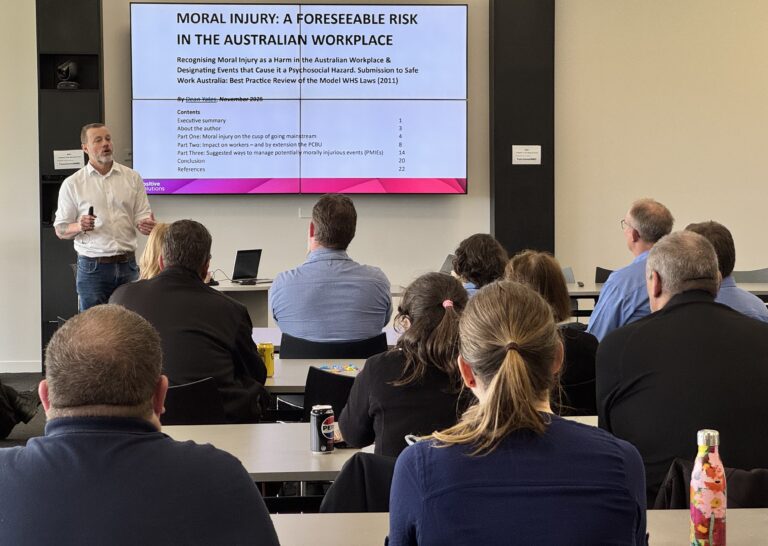
Moral injury can occur when someone’s idea of what’s right has been violated strongly enough. There are two main types, though it’s an evolving concept:
Perpetrating, failing to prevent, bearing witness to, or learning about acts that deeply transgress your moral/ethical values;
Betrayal of what’s right by someone (or organisation/govt/system) who holds authority in a high-stakes situation (more contemporary definitions include transgressions by non-authority figures).
Moral injury results in significant psychological, emotional and spiritual distress as well as significant functional impairment.
You will leave the presentation with:
An understanding of moral injury, and how it may show up in the workplace.
An appreciation of why you need to factor moral injury into the management of psychosocial hazards in your workplace;
A better understanding of clients who might be suffering from moral injury and how to support them.
About your trainer
Dean Yates has a long history as a journalist working in many conflict zones, He has spent considerable time over the past 10 years understanding his own moral injury and how moral injury fits into the larger trauma context. Moral injury was a major theme of his memoir Line in the Sand, which was published in 2023 to global acclaim from trauma and moral injury experts, including Prof Brett Litz and Nancy Sherman. Dean now works as a speaker, trainer and mediator.
Selection of recent participant feedback:
Dean talks about his severe work-related injury resulting in moral injury with the rigour of his former profession as a foreign correspondent. Unsparing in reflections of his illness and the impact on close relationships, he touches on clinical perspectives and the supports that helped. Altogether, Dean makes a compelling case study on moral injury. Dean has much to offer, especially to organisations at a high risk of moral injury to employees.
– Fiona McCarthy, OH&S and Ergonomics Consultant. WorkPS
Dean powerfully combines his personal experience of this phenomenon and his detailed knowledge of contemporary work and developments to help his audience not just understand moral injury, but deeply grasp what is looks and feels like, and how it can be better prevented and supported … Dean’s explanation of the latest developments (such as the imminent changes to clinical guidelines for defining and diagnosing moral injury) situate the audience at the cutting edge of thinking, knowledge and practices but also reinforce how far there is to go to provide better support. The most potent element of Dean’s presentation is his detailed, open, and authentic sharing of his own experiences of moral injury. Hearing first-hand what he experienced, how that affected him and his life, and how long, complex and painful his recovery has been, hits deeply. His recounting of what occurred, and what resulted, powerfully illustrated how key actions at key points in his journey caused, healed – and could have avoided – the suffering he experienced. I left Dean’s presentation feeling deeply grateful that this experience is becoming better understood and supported, inspired to understand and do more to reduce its occurrence and devastating impact, and in awe what Dean has done to come through his experience, support his recovery, and be able to share his story as he does so he can save other people from going through it too.
Dr Megan Woods, (Adjunct) Senior Lecturer in Management, Tasmanian School of Business and Economics, University of Tasmania.
Dean’s presentation is the most dynamic & relevant on moral injury I have seen. He has taken his lived experience as a journalist in warzones and translated this into an understanding of moral injury that should be required for all.
Dean’s presentation was extremely easy to follow, and his grasp of moral injury is significant. He answered a number of long-held questions no one else has been willing to answer for me – or didn’t know how to.
I found your presentation not just educational, but I deeply appreciated the personal aspects of your story which helped me to see a different angle to moral injury.